
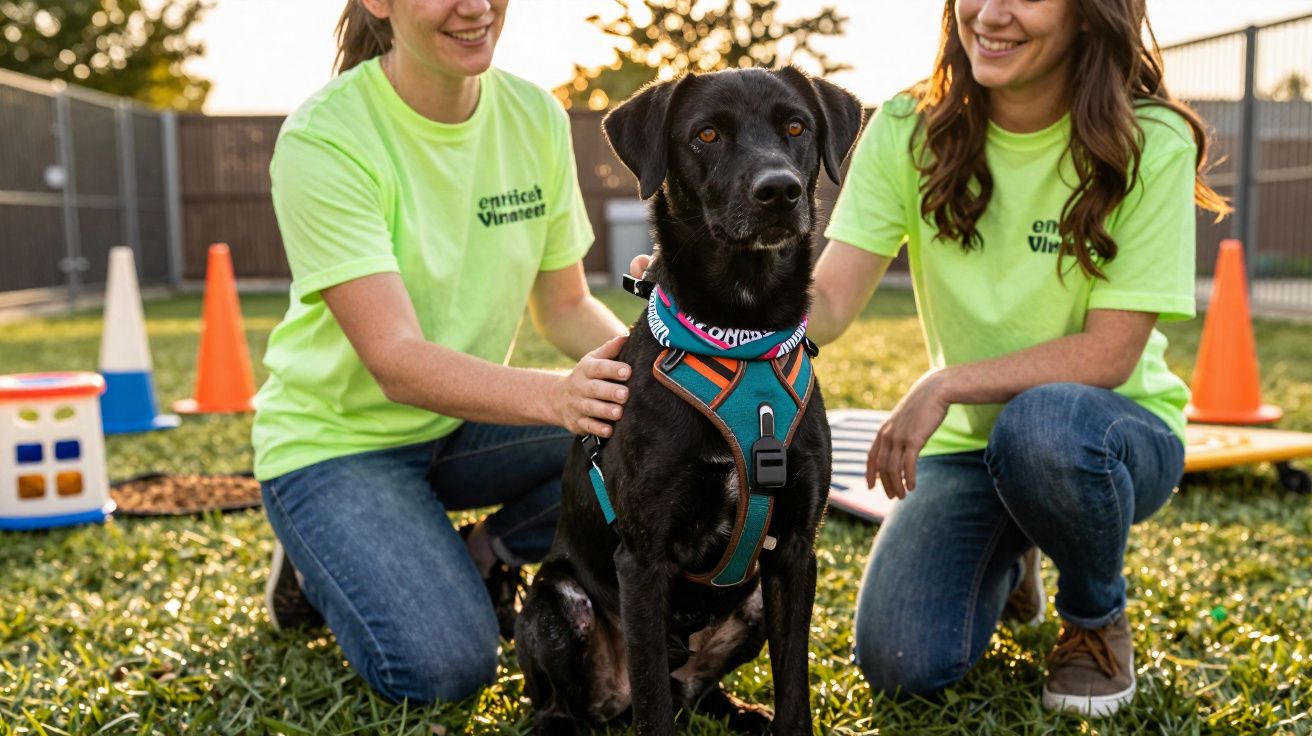
At a crowded shelter in Florida, the team spotted a dog they recognised the moment he reappeared at reception. Draco walked in slimmer, subdued and nothing like the lively youngster they had waved goodbye to.
What came next for Draco-a dog once full of bounce and mischief-was a drawn-out, delicate climb back from ill health, anxiety and being given up. His progress was driven by steady clinical care and a determined circle of staff and volunteers who chose, day after day, not to let him slip through the cracks.
Draco and Miami-Dade Animal Services (MDAS): a hopeful rescue that unravelled
Draco’s journey started as the sort of rescue story that usually ends with a neat happy chapter. At roughly a year old, he was found roaming near Miami and brought to Miami-Dade Animal Services (MDAS), one of Florida’s biggest public shelters.
At the shelter, he was remembered as bright, energetic and keen to engage with people. He didn’t spend long in a kennel before someone local was taken with his dark coat and lively eyes-and completed the adoption.
From the outside, Draco’s next two years looked like ordinary pet life. Then he turned up back at MDAS, and the return landed heavily with the people who remembered him.
After two years in a home, Draco was returned to the shelter in a worrying physical state, fragile and withdrawn.
His previous owner told MDAS they could not continue to provide for Draco’s medical needs. When staff met him at intake, the decline was unmistakable: he was underweight, lethargic and clearly unwell. Those who approached his kennel found a dog folded into himself, too exhausted-and too wary-to show much interest in visitors.
MDAS veterinary staff acted immediately, assessing him and starting treatment with a medical plan tailored to what he needed. But experienced shelter workers also knew his recovery would not be solved with medication alone.
Beyond medicine: how MDAS rebuilt Draco’s body and confidence
The first priority was stabilising his physical condition with fluids, appropriate nutrition, medicines and regular monitoring. Even so, Draco’s demeanour made it clear that his body was only part of the problem. His behaviour suggested a dog who no longer felt safe.
He kept his distance, avoided eye contact and startled easily at sudden noises. Walks were brief and slow. He spent long periods lying still, as though he’d forgotten that curiosity could be rewarded.
So MDAS put a broader plan in place, pairing ongoing veterinary follow-up with structured enrichment and gentle behavioural support designed to reduce stress and rebuild trust.
For Draco, recovery meant more than surviving illness. It meant learning to trust again in an environment that felt safe.
A foster home that changed everything for Draco
A major turning point arrived when MDAS secured an experienced foster carer willing to take Draco in. For sensitive dogs, the constant noise of barking, the bustle of routines and the stream of unfamiliar faces can be overwhelming. A calm home gave Draco something the shelter could not reliably offer: predictable, quiet stability.
In foster care, Draco’s routine focused on small, manageable steps:
- Regular, smaller meals to support safe weight gain
- Short, relaxed walks to rebuild strength and confidence
- Soft bedding and a consistent sleeping place to create security
- Gentle human contact on his terms, with no pressure to “perform”
With time, glimpses of his old personality returned. He began to greet people at the door with a cautious wag rather than retreating. Toys that initially held no appeal became interesting again. At feeding times, he moved from nibbling uncertainly to eating with genuine appetite.
One practical addition that often helps dogs like Draco-especially those who arrive shut down-is keeping a simple daily log in the foster home. Notes on food intake, toileting, sleep, triggers and successful calming activities can help MDAS spot patterns, adjust support and communicate clearly with future adopters.
Training programme progress: structure that helped Draco feel safe
Once Draco was stable enough, MDAS placed him on a training programme designed for long-stay shelter dogs and animals in foster care. Basic cues can look mundane, but for a dog recovering from trauma, they provide structure and clarity.
Training sessions were built around small wins: sitting for a treat, walking politely on a lead, touching a hand on cue. Each predictable success helped Draco understand what was expected and made interactions with people feel safer.
Structured training gave Draco a sense of control, turning daily interactions into clear, positive routines.
Over weeks and months, the change became obvious. Volunteers described a dog who started coming forward when people passed, making eye contact, leaning in for fuss and showing interest in toys and puzzle feeders.
Yet even with these improvements, one hard reality remained: a permanent home did not come quickly.
The invisible barrier: “black dog syndrome” and slow adoption
Three years after his return, Draco was healthier and far more confident-yet he was still routinely overlooked. Staff pointed to a widely discussed shelter pattern in the United States often called “black dog syndrome”.
Large, mostly black dogs like Draco often wait significantly longer for adoption, even when they are friendly and well-trained.
There isn’t one universally accepted explanation. Some people argue that darker-coated dogs are harder to photograph clearly behind kennel bars, which can make them less eye-catching in online adoption listings. Others point to unconscious bias, where black coats are unfairly linked to aggression through films, folklore or personal experiences.
Everyday practicalities also influence choices. Larger dogs may be assumed to be difficult to manage in a small flat, cost more to feed, or feel like a poor fit for households with young children or older relatives.
| Dog type | Typical shelter stay (relative) |
|---|---|
| Small, light-coloured dog | Shorter than average |
| Medium mixed-breed, varied colours | Around average |
| Large, mostly black dog | Longer than average |
Draco matched several “slow adoption” factors at once: he was large, he was dark-coated, and he had a medical history. Even with positive behaviour notes and upbeat videos shared on social media, many visitors still drifted towards smaller or younger dogs.
Because photography can be such a gatekeeper, some shelters now make small changes that help: taking photos outdoors in natural light, using colourful leads or bandanas for contrast, and filming short clips that show body language and responsiveness. For dogs affected by “black dog syndrome”, these steps can make the difference between being scrolled past and being shortlisted.
What Draco’s case reveals about modern shelter work
Draco’s experience highlights how multi-layered sheltering has become. The job is not limited to feeding, cleaning and rehoming. Teams balance medical treatment, behavioural planning, public education and the emotional burden of seeing animals repeatedly failed by circumstances.
Long-stay rehabilitation is resource-heavy. Dogs who remain for months-or years-often require extra training sessions, repeated behavioural assessments and ongoing outreach. That additional effort frequently depends on volunteers who invest hours every week to walk, socialise, film, write profiles and advocate for dogs like Draco.
For Draco, this network was decisive. The veterinary team stabilised his health, the foster carer provided calm consistency, and volunteers reinforced his skills and confidence. Even while he continued waiting for a permanent adopter, his day-to-day life became almost unrecognisable compared with the frightened, shaking dog who returned to intake.
Practical lessons for potential adopters
Draco’s long recovery offers clear takeaways for anyone thinking about adopting a rescue dog with a difficult history.
- Ask detailed questions: Shelter staff can talk you through medical history, behaviour notes and the dog’s current routine.
- Plan for a settling-in period: Many dogs need several weeks to decompress and understand a new home.
- Budget for veterinary care: Ongoing issues-such as allergies or joint problems-can involve continuing costs.
- Consider fostering first: A foster-to-adopt approach can show whether the match works for both the dog and the household.
People often picture rehabilitation as a dramatic “before and after”. More often, it’s built from quiet milestones: the first relaxed sleep in a new bed, the first calm walk without pulling, the first time a previously fearful dog chooses to lie beside a person on the sofa.
Key terms and common patterns: “enrichment”, returns and recovery
The phrase “black dog syndrome” is not a clinical diagnosis. It’s a piece of shelter shorthand used to describe a pattern staff believe they see repeatedly, rather than a formal category. Being aware of it can encourage adopters to look beyond appearance and focus on temperament, compatibility and needs.
Another important term in Draco’s story is enrichment. In practice, enrichment means activities that reduce stress and add interest to a dog’s day: food puzzles, scent-based games, safe chew items and short training sessions. For a dog recovering from neglect or illness, these small challenges can keep the brain engaged and reduce anxiety-related behaviours such as pacing or excessive barking.
If Draco’s experience happened in another city, many of the same stages would likely repeat. A dog is returned in poor condition. A shelter team assesses health and then behaviour. Foster care provides stability. Training builds predictability and trust. Adoption takes longer-especially for a large, dark-coated or older dog, or one with a medical background.
When those elements come together, the result can be quietly profound: not a viral miracle, but a dog who learns that hands bring comfort, meals arrive reliably, and doors open onto walks-rather than another abandonment.





Comments
No comments yet. Be the first to comment!
Leave a Comment