
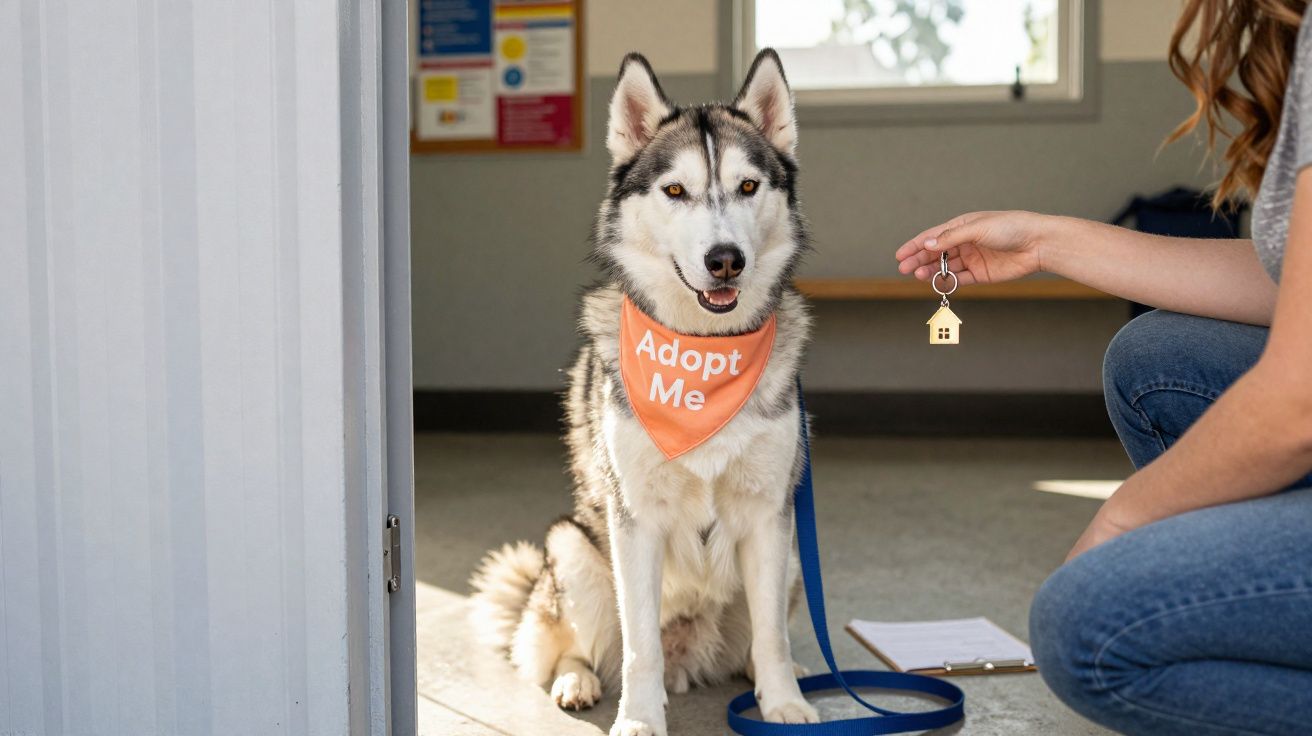
A crowded animal shelter in Virginia can be an overwhelming place. Behind the metal bars of one kennel, a blue‑eyed dog watches families drift past, hoping someone will stop long enough to see him.
The team members already know him inside out: his habits, his sensitivities and the twists in his journey. He has survived life as a stray once before. Now he is facing a different struggle - staying visible long enough for the right person to offer him a permanent home.
Bear the Husky mix at Lynchburg Humane Society: a hard beginning and a brief break
The dog at the heart of this story is Bear, a six‑year‑old Husky mix with striking, sky‑coloured eyes. He arrived at the Lynchburg Humane Society in Virginia in August 2024, following a rough period living as a stray.
Before the shelter took him in, Bear existed without the basics most pets depend on: reliable meals, medical attention and any certainty of safety. At Lynchburg, those essentials were finally in place - clean bedding, regular food and staff who looked out for him.
What still wasn’t there, however, was the one thing many dogs need most of all: a steady family willing to keep him for life.
For Bear, the shelter removed hunger and freezing nights - but it couldn’t remove the ache of not knowing where “home” really was.
A few months after he was brought in, things seemed to improve. A family chose Bear, completed the adoption paperwork and took him home. Staff marked it as a win - rehoming an adult Husky mix is often challenging. Bear left with a collar, an ID tag and a future that finally looked secure.
Returned due to “housing problems”
That stability didn’t last. Roughly five months later, Bear was back at the shelter.
His adopters said they were dealing with “housing problems” and couldn’t keep him. In shelter work, that short phrase can hide many realities: landlords refusing pets, rent increases forcing a move to smaller accommodation, or sudden evictions where animals are the first to lose their place.
As required, staff accepted Bear back and settled him into a kennel once more. For a dog that forms strong attachments to people, that kind of reversal can be disorientating and upsetting.
It is also important to note that a returned pet is not always evidence of indifference. Often it reflects how precarious housing has become - particularly where rents rise quicker than wages and pet‑friendly properties are scarce.
Housing insecurity doesn’t just disrupt people’s lives; it also quietly increases the number of animals waiting in shelter kennels.
A “velcro dog” with a gentle nature - and real separation anxiety
After Bear came back, the Lynchburg Humane Society pushed harder to find him a suitable match. Like many shelters, they turned to social media, where stories about long‑staying animals can sometimes reach far beyond the local area.
Bear drew attention not simply because of his eyes, but because of his temperament. Behaviour professionals often describe dogs like him as a “velcro dog” - a companion who wants near‑constant closeness with their people.
A “unique dog” who wants to stay close
In September 2025, the shelter posted on Facebook calling Bear “a unique dog”. The post connected with viewers, reaching more than 20,000 views, and it focused on who Bear is rather than just how he looks.
The shelter explained that Bear:
- Is affectionate with almost everyone he meets
- Mixes well with children
- Finds being left alone very difficult and can become extremely vocal
- Seeks physical closeness and reassurance from his humans
In one video, Bear howls from inside his kennel, pacing and crying as visitors walk away. Staff were clear that this isn’t aggression; it is anxiety. Bear struggles with solitude and becomes distressed when he thinks he’s been left behind.
Some people prefer a more independent pet. Others actively want an exceptionally affectionate dog. The shelter tried to reach that second group by being frank and specific about Bear’s needs.
“Not everyone loves a clingy dog, but for those who do, Bear will understand you - and you’ll understand Bear,” staff wrote.
Viral attention online, but few people turning up in person
In one respect, the campaign worked: Bear’s posts performed strongly. People shared his photos, commented on his eyes and expressed heartfelt sympathy.
But sympathy did not become applications. Staff said that although Bear attracted high engagement on social media, very few families actually came to the shelter asking to meet him.
This mismatch between online emotion and real‑world commitment is a familiar problem for rescue organisations. A popular post can raise awareness, but adoption still depends on someone being ready to reorganise daily life around a dog with clear, non‑negotiable needs.
Bear’s requirements include:
| Need | Why it matters |
|---|---|
| Low time alone | He becomes anxious and very vocal if left for long periods. |
| Active lifestyle | As a Husky mix, he benefits from consistent exercise and mental stimulation. |
| Secure housing | Owners must confirm pet rules and plan for long‑term stability. |
| Patient, calm guardians | Multiple disruptions may mean he needs time to settle again. |
Why dogs like Bear can struggle to leave a shelter permanently
Bear’s experience reflects a broader pattern seen in shelters in both the US and the UK: some dogs are rehomed quickly, while others remain for far longer. Age, size, breed mix and behaviour all influence how long an animal waits.
Husky‑type dogs can be particularly demanding. They tend to be energetic, bright and often noisy. If they are under‑exercised or bored, they may howl, dig, chew or try to escape. Many people fall in love with the look of a Husky mix without fully appreciating the day‑to‑day routine required.
Bear’s “velcro dog” nature adds another complication. Separation anxiety is common among rescue dogs and can bring knock‑on effects: complaints about barking, damage at home and extra pressure on households already balancing work, commuting and childcare.
For shelters, placing a dog like Bear usually means finding people who:
- Work from home, or can reliably use dog daycare or dog walkers
- Have tolerant neighbours, or live somewhere noise is less likely to cause conflict
- Are prepared to put time into training and gradual desensitisation to time alone
Preparing to adopt a velcro dog: practical steps that protect the dog and the adoption
Anyone thinking about a dog like Bear will do better with planning than with good intentions alone. A few straightforward measures can make the difference between a stable home and another return.
Housing checks and landlord conversations (before you adopt)
Before signing anything, prospective owners should:
- Read their tenancy agreement for pet clauses, including size or breed restrictions
- Ask the landlord in writing about deposits, additional cleaning requirements or insurance expectations
- Think through how a sudden move, redundancy or rent rise might affect their ability to keep a pet
In many places, tenants’ organisations and legal advice clinics can help renters understand pet policies and challenge blanket “no pets” rules where appropriate.
Living with a dog that hates being alone
For dogs with separation anxiety, small changes done consistently can reduce distress. Behaviour specialists often recommend:
- Beginning with very short absences and extending them slowly
- Offering puzzle toys or long‑lasting chews that are only given when the dog is alone
- Keeping departures and returns calm rather than emotionally charged
- Seeking a qualified trainer if barking, panic or destruction escalates
Separation anxiety isn’t “bad behaviour”; it is fear - and it can improve with patience, structure and the right support.
An added option worth considering: fostering or a trial period
One route that can help dogs like Bear is a foster placement or a structured trial adoption, where the shelter remains closely involved. A foster home can reveal how a dog copes in a real household, what triggers anxiety and what routine helps them settle.
For adopters, it can also reduce risk. Rather than guessing whether a velcro dog will fit around work patterns, neighbours and travel, a supported trial gives everyone a clearer, kinder answer - before a commitment becomes a crisis.
Building a support plan for the first month at home
Many returns happen early, when stress is highest and expectations are unrealistic. Planning a “first month” support system can prevent that. Booking an initial vet check, arranging time off work, planning exercise and enrichment, and budgeting for training sessions can all help a sensitive dog transition successfully.
Where available, post‑adoption helplines and follow‑up appointments offered by shelters can be invaluable - particularly for dogs with separation anxiety or a history of upheaval.
Why Bear’s story matters beyond one dog
Bear’s case sits where two pressures meet: growing housing instability and increasing numbers of unwanted or returned pets. Each time a landlord bans animals or a family is forced to move at short notice, dogs like Bear absorb the consequences.
For anyone considering adoption, Bear’s journey offers both a quiet warning and a hopeful challenge. Rehoming can transform a dog’s life - but only when the animal’s needs genuinely match the household’s space, schedule, finances and long‑term housing security.
In shelters across the US and the UK, staff encounter versions of Bear every day: loyal, sensitive dogs who have done nothing wrong, yet find themselves back behind bars because circumstances outside the kennel changed too quickly. Careful planning, honest self‑assessment before adopting and realistic thinking about housing risks can reduce how often kennel doors close on a dog who believed he’d finally found home.






Comments
No comments yet. Be the first to comment!
Leave a Comment