
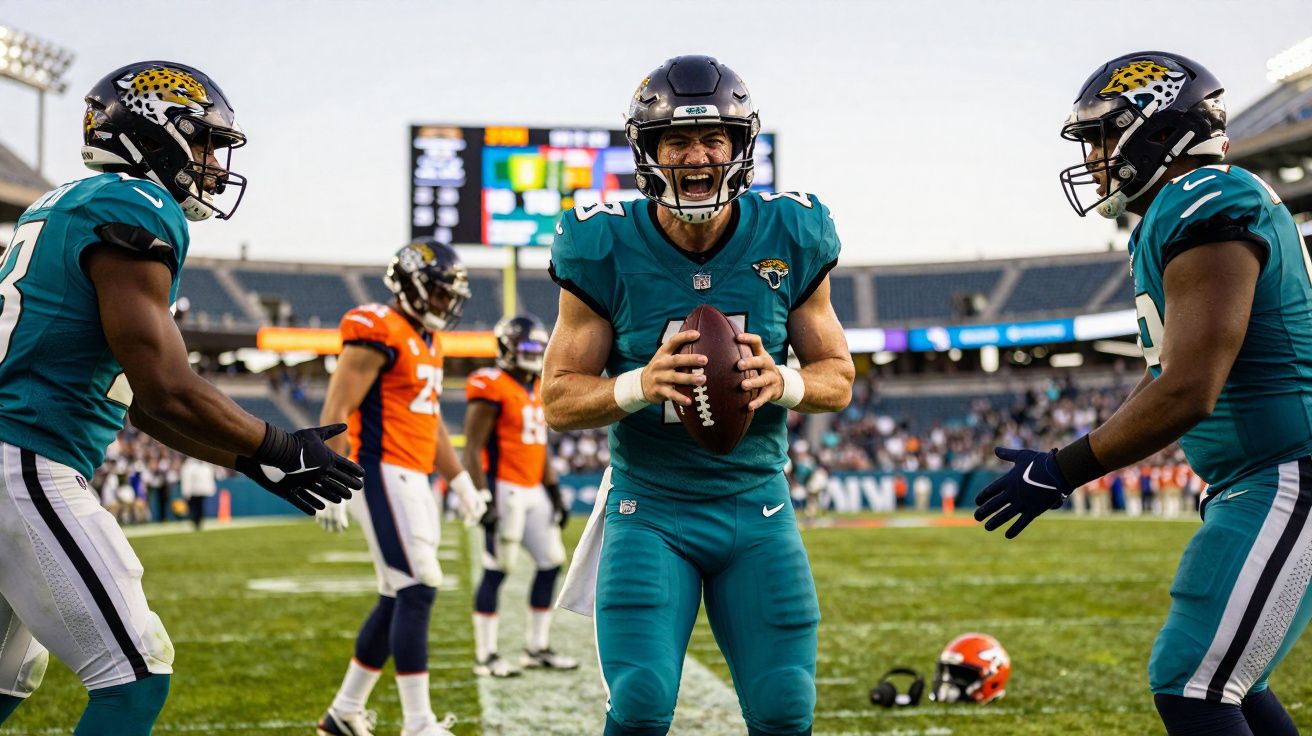
The stadium clock seemed to haemorrhage the last few minutes as a ripple of noise moved through the seats - that peculiar blend of fear and reckless optimism you only hear around football.
Denver fans were bouncing in anticipation, convinced they could smell a road win. Jacksonville Jaguars supporters were half on their feet, half in prayer, eyes fixed on Trevor Lawrence as he trotted back out. The scoreboard suggested the Broncos had things under control; the Jaguars’ sideline told a different story.
The atmosphere thickened, as if the whole ground had decided to hold its breath at once. A handful of reluctant early leavers began edging towards the concourse, still craning their necks to check the field. Lawrence clapped once - sharp and deliberate - then split the huddle. Behind the bench, someone muttered, “Just give us one proper drive, Trevor.” They had no idea they were about to witness three touchdowns, plus a turn nobody in the building saw coming.
Some matches don’t gradually swing. They fracture.
The night the script flipped on the Broncos
When Denver stretched the lead at the start of the fourth quarter, EverBank Stadium felt flat and fatalistic. Orange shirts were noisy; teal ones went quiet. The big screens lingered on more grimaces than grins, and the Jaguars offence had done just enough sputtering to trigger that familiar sense of here we go again.
Then Lawrence re-entered and the mood shifted - subtly at first, but unmistakably. His footwork looked crisper. His gaze stopped wandering and started locking onto targets. Completions arrived with extra bite, and the first of his three late touchdowns didn’t merely shave points off the Broncos’ advantage; it put a crack through it, like glass under strain.
The drive that lit the fuse came with pace and defiance. Jacksonville went hurry-up. A quick slant to Christian Kirk jolted the crowd awake. A designed run for Travis Etienne pulled Denver’s linebackers out of shape. Then the strike: Lawrence dropped back, glided within the pocket and fired a laser into the back of the end zone. The receiver secured it while tumbling, arms extended and toes scraping in-bounds. Suddenly it was a one-score game - and Denver’s sideline seemed to tighten, the noise dropping half a notch.
The second touchdown felt like a quarterback in full rhythm: no flailing, no wasted movement, just calm processing. Lawrence found three different receivers on the same march, hitting varying depths and stretching the Broncos secondary so thin it looked as though someone had drawn it out with a ruler. When he rolled right and located his tight end breaking free near the pylon, Broncos defenders arrived a fraction late - as if the entire sequence had them chasing shadows.
By the time the third touchdown arrived - the one that pushed Jacksonville ahead late - it felt less like a surprise and more like an outcome you could see forming. In the red zone, Lawrence took the snap, scanned quickly and rifled a dart into a window that barely existed. A defensive back’s hand flashed across the lane, fingertips grasping at empty air. EverBank erupted, the noise landing like a physical wave. Three touchdowns in one quarter, and a match that had been drifting towards a quiet finish suddenly had edges.
How Trevor Lawrence dismantled Denver’s defence, step by step
None of it was accidental. Lawrence didn’t simply “heat up”; he began targeting precise weak points in Denver’s coverage plan. Early in the fourth quarter, the Broncos were sitting back in zone, determined to keep everything in front. Lawrence responded by living underneath: quick outs, hitches, crossers - five metres here, eight metres there - the football version of body shots.
Those steady gains nudged Denver’s safeties closer to the line, one cautious step at a time. That’s where Lawrence struck. On the drive ending with touchdown number two, he used motion to confirm man coverage, then stacked route combinations to one side and forced a cornerback to choose between two bad options. The corner guessed wrong, Lawrence hit the free man, and the cushion Denver had built began to dissolve.
The finishing blow was his pocket discipline on the decisive march. When the Broncos tried to manufacture extra pressure, Lawrence didn’t fade backwards or drift into sacks. He stepped up, slid laterally and kept his shoulders square to the field. That small, controlled footwork bought just enough time on the go-ahead touchdown for the route to fully develop. On the broadcast it looked routine; at pitch level it was like threading a needle through traffic at roughly 64 km/h.
One extra detail that mattered: Jacksonville’s hurry-up execution wasn’t just about speed - it was about clarity. The cleaner the signalling and the quicker the alignment, the less time Denver had to disguise coverages or rotate late. In a tight fourth quarter, that communication edge can be the difference between “nearly” open and actually open.
What fans - and young quarterbacks - can take from Trevor Lawrence’s comeback
There’s a genuine blueprint in how Lawrence handled the closing minutes. First, he didn’t go hunting for the deep shot straight away. Rather than forcing low-percentage bombs, he treated the field like a staircase: short throws, simple completions, receivers doing the running. That built his rhythm while disrupting Denver’s timing.
Second, his body language never dipped. No slumped shoulders after an incompletion, no frantic “hero ball” energy. Between snaps he walked - he didn’t sprint - back to the huddle, calm to the point of casual. That posture changes a group. Linemen breathe. Receivers stop staring at the clock and start thinking about the next down. The touchdowns stop feeling like miracles and start feeling like the natural result of good decisions.
For young quarterbacks watching, there’s also a quiet lesson in how he used the middle of the field under pressure. Lawrence didn’t cling to the touchlines in crunch time. He attacked linebackers in space, threw into tight but layered windows and trusted timing. You don’t need the biggest cannon for that; you need repetitions, nerve, and the willingness to throw where the collisions happen.
On the other side of the emotional ledger, the crowd learned something about itself. As Denver’s lead shrank, you could see the lower tier physically change - shoulders rising from slumped resignation into forward-leaning belief. That swing is exactly why late surges hit so hard: everyone understands the odds are long with the clock draining, yet that’s the moment our brains start whispering, What if this is one of those nights?
It also helps to be honest about Denver’s part in it. The Broncos turned conservative at precisely the wrong moment, leaning too heavily into “protect the lead”. Soft zones, predictable rushing lanes, and play-calling that seemed afraid of its own shadow. Nobody truly wants their team to turtle up with a narrow fourth-quarter advantage, but coaches fall into that trap all the time. The Jaguars didn’t conjure this from nowhere - they simply walked through the door Denver left half-open.
“Trevor didn’t blink once,” a Jaguars lineman said afterwards near the locker stalls, helmet still in his hand. “The scoreboard meant nothing to him. He kept repeating, ‘Next drive. Next throw.’ When your quarterback talks like that, you don’t feel finished - you feel like you’re running late to your own comeback.”
From a tactical point of view, Jacksonville’s late surge can be followed in three layers that even casual fans can track live:
- Spot repetition within a drive. If the QB keeps returning to the same route concept, it usually means he’s identified a matchup he can exploit.
- Check the safeties’ depth before the snap. When they start creeping down, something is likely to appear behind them.
- Notice the tempo change. A sudden shift faster or slower is rarely random - it’s often a deliberate blow to a defence’s rhythm.
That’s the beauty of a night like this: once you know what to watch, late-game drives feel less like chaos and more like pattern. And that is where the tension really starts to bite.
The kind of game everyone talks about on Monday
When the final whistle went and the Jaguars walked away with a late lead transformed into a full victory, the story had already grown bigger than the score. Fans were pulling out their phones to replay the touchdowns on social media before they’d even left their seats. Denver supporters stared at the turf as if they’d just watched a film with the ending missing.
For Jacksonville, it didn’t register as just another comeback. It felt like a sharp reminder that with Lawrence under centre, this team isn’t built merely to linger - it’s built to flip matches in the final ten minutes. Those three touchdowns didn’t only scorch the Broncos; they forced the league, even slightly, to rethink what it means to hold a lead against the Jaguars.
There’s a quieter aftershock too: the kids in teal in the stands, absorbing what it looks like when a quarterback refuses to flinch. They’ll file this away as the night “Trevor took it back”. Years from now, a school quarterback will reference the moment he watched Lawrence torch the Broncos late and thought, Right - that’s how you stay in it when everyone else thinks it’s done. And somewhere, a Broncos fan will still insist they felt the momentum leave Denver’s sideline three plays before the rest of us noticed.
A final angle worth adding is how quickly narratives harden. One fourth-quarter swing can recast a month of form: play-calling gets labelled “brave” instead of “reckless”, a quarterback’s calm becomes “clutch”, and defensive choices that felt sensible at 10 minutes left get judged as timid afterwards. That’s why these finishes linger - they reshape the language we use to describe the same decisions.
| Key point | Detail | Why it matters for the reader |
|---|---|---|
| Lawrence’s three late TDs | He targeted soft coverages, used tempo, and trusted tight windows. | Shows comebacks are built on specific, repeatable decisions - not magic. |
| Broncos’ shift to conservative play | Soft zones and cautious calls opened the door for Jacksonville. | Helps fans see how “protecting a lead” can quietly invite disaster. |
| Emotional swing in the stadium | From resignation to roaring belief in three drives. | Makes the drama relatable, highlighting why late-game moments stick with us. |
FAQ
Did the Jaguars trail for most of the game?
Yes. The Broncos controlled the scoreboard deep into the second half before Lawrence’s late burst flipped it.Were all three of Lawrence’s touchdowns in the fourth quarter?
They came in the final stretch, with the last two drives in particular turning a Broncos advantage into a Jaguars lead.Was this Lawrence’s best performance as a pro?
Perhaps not by pure statistics, but as a statement of poise, timing and clutch execution, it sits close to the top of his CV.Did the Broncos defence collapse, or did Lawrence simply take over?
It was both: Denver became softer and more reactive, while Lawrence grew more precise and more aggressive snap by snap.What should casual fans look for when rewatching the game?
Track how coverages evolve, how tempo changes, and how one quarterback’s body language can pull an entire stadium from doubt to belief.




Comments
No comments yet. Be the first to comment!
Leave a Comment